
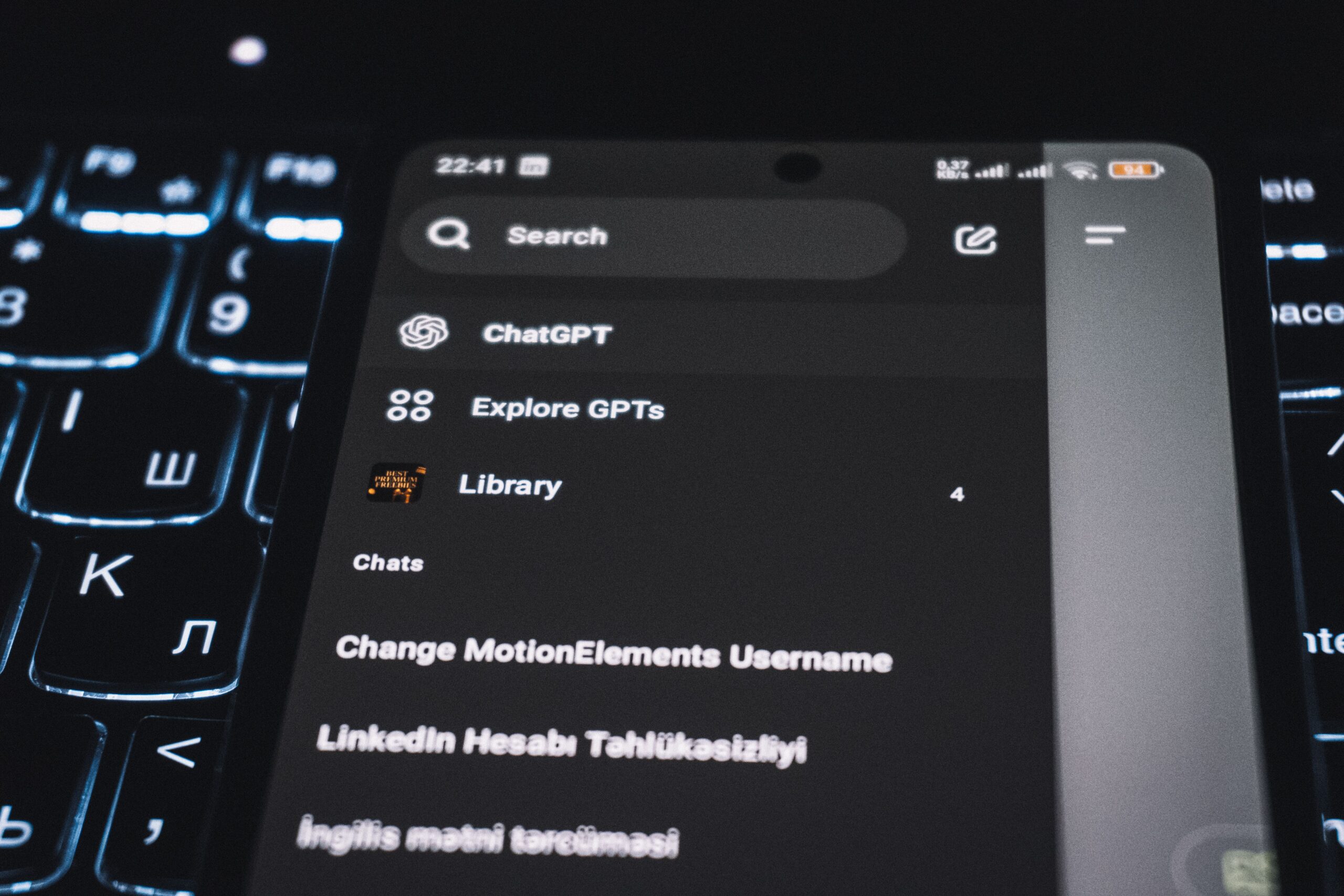
Quick Answer:What is the difference between ChatGPT memory and Hippora? ChatGPT memory exists to make its answers better. It holds facts about you, your job, your preferences, your current projects, and quietly feeds them into each new conversation so you stop repeating yourself. Hippora exists to make your life legible to you. What accumulates is My Story, a living autobiography, a Life Compass showing where your life is pointing, and Insights only when the evidence supports them.
Which do you actually want? If you want better answers, ChatGPT memory is excellent, and you already have it. If you want to open something in ten years and see what happened to you, a list of remembered facts will not do that, and it was never built to.
Before you read any further, go and ask it.
Open ChatGPT and type: what do you remember about me? It takes about fifteen seconds, and what comes back will tell you more than this article can.
What You Will Get Back
Almost certainly a list.
Your name. Your job or your field. Whether you prefer bullet points or you do not. A project you mentioned in March. Your city. Maybe a preference about tone, a language you are learning, the fact that you have a dog.
Read it properly and notice what it is. It is a serviceable profile of a customer. Everything on it is true, none of it is wrong, and it tells you nothing you did not already know about yourself.
Now ask the harder question. Ask it what it has noticed about you. What has changed in you this year? What you keep circling back to.
It will improvise something plausible, because that is what it is built to do, and the answer will be generic in a specific way. It does not have the material, because it was never collecting that material. It was collecting the things that make its next reply more useful.
What ChatGPT Memory Is Actually For
This is not a criticism. It is a design goal, and the design achieves it.
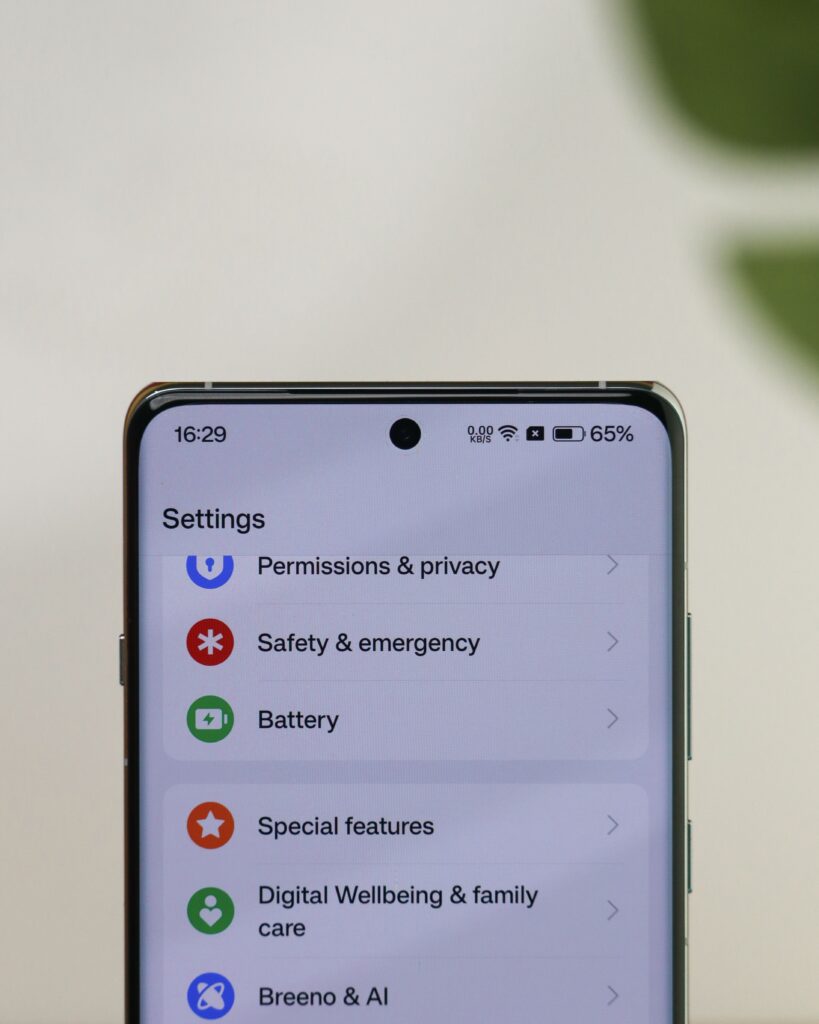
OpenAI describes memory as working in two ways. Saved memories are details you have asked it to remember, or that it decided were worth storing. Chat history is looser, a system that draws insights from your past conversations to make future ones more relevant, without turning every detail into a separate entry. Both can be switched off independently in Settings, and Temporary Chat gives you a conversation that neither uses nor updates memory at all.
Since April 2025, the second layer has referenced your full history rather than just explicitly saved facts, which made it considerably more useful.
The purpose of all of that is personalisation. Memory exists so that the model performs better for you, and it does. You stop re-explaining your job every Monday. It formats things the way you like without being asked. For the thing it is for, it is a genuinely good feature.
But the unit is the fact, and the destination is the next reply.
Related: Long-Term AI Memory: How It Actually Works in 2026
Three Things It Cannot Do
Not flaws. Consequences of what it is for.
It cannot hand you a document. There is no artefact. You can view your saved memories as a list, and that list is a settings page rather than a record of your life. Nothing exists that you could sit down and read on a Sunday.
It cannot notice across time. Memory is retrieved to inform the current answer, not analysed as a body of material. Nothing is scanning fourteen months of conversation for the fact that you have described the same worry eleven times in different words. That is a different operation from remembering, and it is the one that changes people.
It cannot show you where you are pointing. Direction requires a frame. Eight dimensions of a life, tracked over years, is a structure somebody has to design deliberately. A general-purpose assistant has no reason to have one.
There is a practical limit worth knowing too. Reports suggest the saved memory store is bounded, in the region of a thousand or so words in total, which is ample for preferences and projects and nowhere near a life. Users also report stale entries, memories that reappear after deletion, and details bleeding into contexts where they do not belong, which is what happens when a system optimises for helpfulness rather than for accuracy of record.
The Question Almost Nobody Asks
What happens to it?
On consumer plans, conversations and memories may be used to improve OpenAI’s models by default. You can turn that off in Settings under Data Controls by disabling “Improve the model for everyone”, and most people have never opened that screen. Deleted memories are described as removed from systems within thirty days rather than immediately. Content may be reviewed by authorised staff for safety and quality.
None of that is hidden. It is documented, it is standard for the industry, and it is a reasonable arrangement for a general-purpose assistant that you use to write emails and debug code.
It is a different proposition if what you are typing is the account of your life. And that is the moment to notice that ChatGPT is not the wrong tool because it is bad. It is the wrong tool because you are using a general-purpose assistant for something it was not designed to hold.
Related: AI Companion Privacy: What Most Apps Won’t Tell You
What Hippora Does With the Same Material
Hippora starts from the opposite end. Not what would make the next reply better, but what should still exist in ten years.
You talk, by voice or in writing. Hippora keeps what carries meaning and lets the rest fall away. Those memories become My Story, a living autobiography written back to you in chapters, drawn only from what you actually said and never invented. Not a settings list. Something you read.
From that Story come the two things a facts-based memory structurally cannot produce. The Life Compass reads eight dimensions of your life and moves as you do, so you can see that Relationships were tender in spring and are steadier now, and why. Insights connect patterns across time, surfaced only once there is enough evidence to say something true, and always tied back to the specific moments behind them.
Then Practices: fifteen capacities developed in sequence through body, awareness, attention, imagination, and response, because noticing a pattern and doing something about it are different skills.
And the data arrangement is the inverse of the default. Encrypted at rest and in transit. Never used to train models, stated as a permanent commitment rather than a setting you have to find. Nothing sold, nothing shared. Every remembered fact visible, editable, and removable, with full export or permanent deletion whenever you want.
Related: My Story, your living autobiography
Run the Experiment Properly
Here is the test that settles it, and it costs you nothing.
Ask ChatGPT what it remembers about you, and look at the list. Then ask yourself three things.
Is there anything on it you would want to read again in ten years? Almost certainly not, because it is a profile rather than a life.
Could you reconstruct what this year was actually like from it? No, because the material that would let you do that was never the point.
And if it all vanished tomorrow, what would you have lost? For most people, the honest answer is a little convenience.
Now imagine the same test on something built for the other job. A document that reads as chapters. A reading of where your life has moved across eight dimensions. Patterns you did not spot, evidenced by the moments that produced them. Losing that would be losing something.
That is the whole difference, and it is not about which system remembers more.
Should You Use Both?
Yes, obviously, and this is not a diplomatic answer.
They do not compete. ChatGPT is a superb assistant, and its memory makes it a better one. Use it for work, for thinking through problems, for the hundred tasks it is genuinely excellent at, and let it remember that you prefer short paragraphs.
What it should not be is the place your life accumulates, because it is not holding it in a form you can ever get back.
Keep the assistant. Put the life somewhere built for a life.
The Bottom Line
ChatGPT memory is a good feature doing exactly what it was designed to do. It knows facts about you so that its answers improve, and by that measure it works.
But a remembered fact is not a life you can reread. There is no document, no direction, no pattern surfaced across years, and by default on consumer plans, the material may be feeding model training unless you have been into a settings page most people never open.
You will forget most of your own life. An assistant that knows your job title will not stop that. Hippora is being built so that you do not have to, and it is coming to iPhone and Android with a free tier that is permanent rather than a trial. Your first reflection takes four minutes.

Frequently Asked Questions
How does ChatGPT memory work?
Two ways. Saved memories are specific details it stores about you, either because you asked or because it judged them worth keeping. Chat history is looser, drawing insights from past conversations to make future ones more relevant. Both can be turned off independently in Settings, and Temporary Chat neither uses nor updates memory.
Can ChatGPT remember my whole life?
No, and it is not trying to. Saved memory is bounded and holds facts rather than narrative, and the chat history layer retrieves what is relevant to the current conversation rather than analysing your history as a body of material.
Does ChatGPT use my conversations to train its models?
On consumer plans, by default, yes. You can turn it off in Settings under Data Controls by disabling “Improve the model for everyone”. Deleted memories are described as removed within thirty days rather than immediately.
Can I read back what ChatGPT knows about me?
You can view saved memories as a list in Settings and ask it directly in conversation. That is a settings page rather than a record of your life, and OpenAI notes the summary may not show every detail affecting personalisation.
How is Hippora different from ChatGPT memory?
Purpose. ChatGPT memory exists to improve the next answer. Hippora exists to build something you can read: My Story, a Life Compass across eight dimensions, and Insights surfaced only when the evidence supports them. It also never uses what you write to train models.
Should I use ChatGPT or Hippora?
Both, for different jobs. ChatGPT is an excellent assistant, and its memory makes it better at that. Hippora is for the material you would want to still have in ten years.
Related Topic: Memory and new controls for ChatGPT, OpenAI
Related Topic: ChatGPT Memory Explained: Features, Limits and Privacy
Keep discovering who you're becoming.
Hippora connects your conversations, memories, and reflections over time.


