
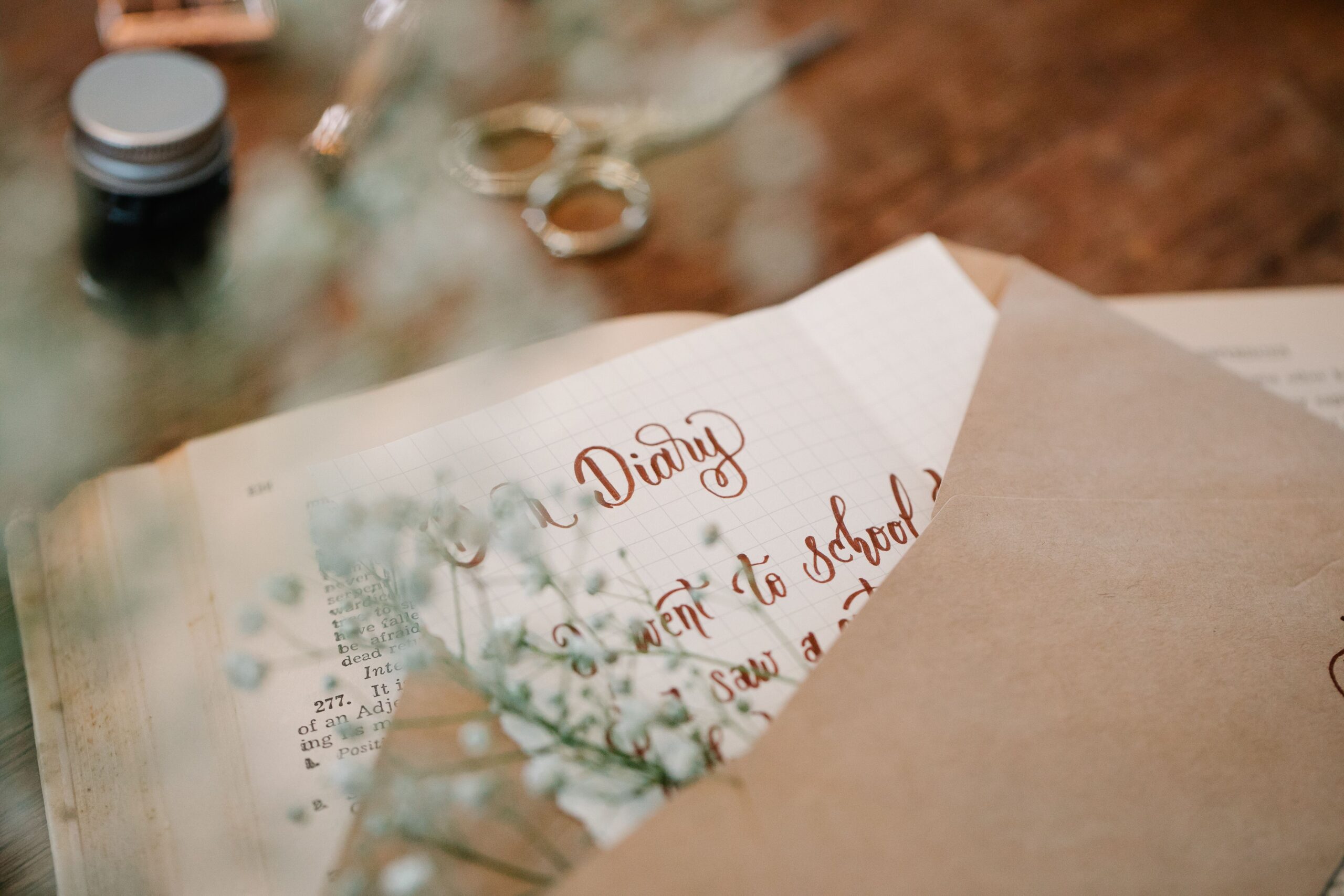
Quick Answer:Learning how to write a letter to your future self begins with describing your life as it is today. Write about what matters to you, what you’re struggling with, what you hope will change, and what you don’t want to forget. Address your future self as someone you care about, rather than someone who must meet your expectations. Choose a date to reopen the letter, then leave it untouched until that day arrives.
Imagine receiving a letter tomorrow.
It’s addressed to you.
The handwriting looks familiar.
You open it and discover that you wrote it ten years ago.
At first, you laugh.
You’d forgotten how you used to express yourself. The phrases you used. The things you thought were important.
Then you read a sentence that makes you stop.
“I hope Mum is still here. I hope we’re spending more time together.”
And suddenly, you’re not reading an old letter anymore.
You’re meeting someone.
Someone who knew your life before everything that happened next.
Someone who had no idea which relationships would last, which plans would fail, or which ordinary days would eventually become precious memories.
That person was you.
But they were also someone who knew things about your life that you’ve since forgotten.
They remember what you were afraid of.
What you wanted.
What you believed would happen.
And what you couldn’t yet imagine.
Now think about the opposite.
What if you could write a letter today that would reach you ten years from now?
What would you say?
Would you offer advice?
Ask questions?
Make predictions?
Or would you simply want that future version of yourself to remember what it felt like to be you, right now?
That’s what makes a letter to your future self interesting.
It isn’t really a letter about the future. It’s a record of the present, waiting to be understood later.
How to Write a Letter to Your Future Self That Actually Matters
Most people begin with predictions.
“In five years, I hope I’m successful.”
“I hope I own a house.”
“I hope I’ve travelled more.”
There’s nothing wrong with those hopes.
But imagine opening that letter five years later.
You might have achieved everything on the list.
Or almost nothing.
Either way, the letter tells you surprisingly little about the person who wrote it.
You know what they wanted.
But you don’t know what their life felt like.
What were their mornings like?
Who did they speak to every day?
What made them laugh?
What kept them awake at night?
What did they take for granted?
The most meaningful future letters often contain details that seem almost too ordinary to record.
Because those are precisely the details that time can make difficult to recover.
A letter written today becomes a kind of personal time capsule.
It preserves not only your ambitions but also the perspective from which those ambitions made sense.
And that distinction matters.
You aren’t writing a performance review for your future self.
You’re leaving evidence of a life in progress.
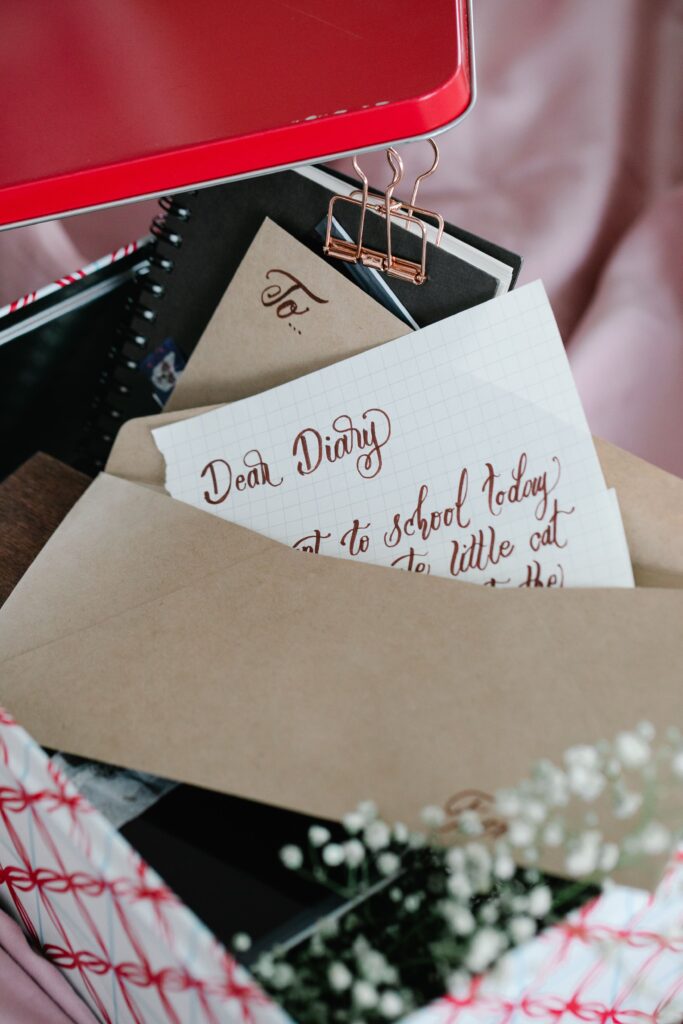
Why Writing to Your Future Self Can Change Your Perspective
Psychologists have studied how people think about their future selves and how connected they feel to the person they expect to become.
In a 2011 paper published in the Journal of Consumer Research, researchers Hal Hershfield and colleagues investigated whether making people’s future selves more vivid could influence financial decision-making.
In their experiments, participants who interacted with age-progressed representations of themselves showed greater preference for delayed financial rewards or greater retirement-oriented allocation in the study tasks.
You can read the research in Increasing Saving Behavior Through Age-Progressed Renderings of the Future Self.
That doesn’t mean writing a letter will automatically make you financially responsible or improve your life.
The research examined particular interventions and decisions, not the long-term effects of personal letters.
But it points towards an interesting psychological idea.
The person you’ll become can feel distant from the person you are today.
Almost like a stranger.
And when that future person feels more real, you may think differently about decisions that affect them.
Another study, Don’t Stop Thinking About Tomorrow, explored how people’s sense of continuity with their future selves related to intertemporal choices.
The broader idea is simple.
Your future self isn’t merely an abstract possibility.
They’re someone who will live with the consequences of what you do today.
But here’s where future letters offer something different.
They also create a message travelling in the opposite direction.
The future version of you gets to discover what mattered to the person making those choices.
That makes the exercise about more than motivation.
It’s also about memory, perspective, and the continuity of your life.
1. Describe Your Ordinary Life Before It Changes
Start with something that may seem unimportant.
Describe a normal day.
What time do you wake up?
Where do you live?
What do you do in the morning?
Who do you speak to most often?
What do you usually eat?
What music are you listening to?
What does your home look like?
What are you spending your evenings doing?
Be specific.
Instead of writing:
“Life is busy at the moment.”
Write:
“I get home around seven most evenings. I usually eat something quickly, spend a little time on my phone and tell myself I’ll go to bed earlier tomorrow.”
That may not sound particularly profound.
But imagine reading it ten years later.
Perhaps your routine will be completely different.
Perhaps the home you’re describing will belong to someone else.
Perhaps the people you see every day will no longer be part of your daily life.
Perhaps you’ll miss something about this period that you don’t even notice now.
Ordinary details can become extraordinary simply because they belong to a time you can no longer revisit.
So don’t write only about the big things.
Record the texture of your life.
The small routines.
The familiar places.
The things you assume will always be there.
One day, they may be the details you’re most grateful to remember.
2. Tell Your Future Self What Matters to You Right Now
Imagine you’re writing to yourself at forty.
But you’re twenty-five today.
You might be tempted to write about everything you want to achieve by then.
Before you do, write about what matters to you now.
Not what sounds impressive.
Not what you’re expected to value.
What genuinely matters.
Perhaps your family is everything to you.
Perhaps you’re determined to build something of your own.
Perhaps you value freedom more than financial success.
Perhaps you’re trying to become more confident.
Perhaps you’re learning to appreciate a quieter life.
Try writing:
“Right now, the three things that matter most to me are…”
Then explain why.
This is important because values can change.
The things that motivate you today may not carry the same weight in ten years.
And that’s not necessarily a problem.
Your future self may read the letter and realise they’ve moved in a completely different direction.
They might feel proud.
Surprised.
Or even a little sad.
But they’ll have something valuable.
A record of what once mattered, written before time changed its meaning.
If you’re unsure what your priorities actually are, our article How to Know What You Want in Life explores seven questions that can help you think more clearly about your values and direction.
3. Be Honest About What You’re Struggling With
Most people are comfortable writing about their hopes.
It’s harder to write about their fears.
Especially when they imagine a future version of themselves reading the words.
You might want to sound strong.
Optimistic.
Certain that everything will work out.
But imagine opening a letter written during one of the most difficult periods of your life.
And discovering that your younger self had written:
“I’m scared I won’t be able to manage everything.”
Or:
“I don’t know if this relationship is going to last.”
Or:
“I feel like everyone else knows what they’re doing, and I’m still trying to figure it out.”
Years later, those sentences might mean something very different.
Perhaps the problem was resolved.
Perhaps it wasn’t.
Perhaps something you were terrified of turned out to be manageable.
Or perhaps you still remember how difficult that period was, but you’ve forgotten how uncertain you felt while living through it.
A future letter gives you permission to preserve that uncertainty.
You don’t need to turn every difficult experience into an inspirational lesson.
You can simply tell the truth.
“This is what I’m worried about.”
“This is what I’m finding difficult.”
“This is what I wish someone understood.”
You may eventually discover that you were stronger than you realised.
But you don’t need to know that today.
And your future self doesn’t need you to pretend.
4. Write About the People Who Make Your Life What It Is
Think about the people in your life today.
Not just the ones you love.
The ones who form the background of your ordinary existence.
The colleague who makes you laugh.
The neighbour you speak to most mornings.
The friend who always answers your calls.
The family member you keep meaning to visit.
The person whose advice you trust.
Now imagine opening your letter in ten years.
Some of those relationships may have grown stronger.
Others may have changed.
You might have lost touch.
You might have experienced bereavement.
Or you might be surprised by how important someone became.
Write their names.
Describe what they mean to you.
Mention something specific.
“Dad keeps telling the same story every time we have dinner, and we all pretend we haven’t heard it before.”
“My son is obsessed with football at the moment. He wants to play every chance he gets.”
“My best friend and I still laugh about something that happened years ago.”
These aren’t details you’d necessarily include in a traditional diary entry about your goals.
But they may become the most moving parts of the letter.
Because the people who fill our everyday lives can be so familiar that we forget to describe them.
And sometimes a few ordinary sentences can preserve a relationship as it existed at a particular moment in time.

5. Ask Questions You Can’t Answer Yet
Here’s where writing to your future self becomes especially interesting.
You can ask questions that nobody can answer today.
Not even you.
“Did we ever make that trip?”
“Are we still living in the same place?”
“Did the business work out?”
“Are we happier than we were when I wrote this?”
“Did we learn to stop worrying about what everyone thinks?”
You might even ask:
“What happened that I never could have imagined?”
That last question is worth including.
Because much of what shapes our lives isn’t something we plan.
We meet people unexpectedly.
Opportunities arrive.
Circumstances change.
We discover interests we didn’t know we had.
And sometimes the most important events in our lives begin as things we never thought to ask for.
Leave room for surprise.
Don’t make the letter only about whether you achieved your original goals.
Ask what changed.
What you learned.
What you discovered.
What you wish you’d understood sooner.
Your future self may not answer the questions aloud.
But reading them can reveal the distance between what you expected and what actually happened.
And that distance can tell an extraordinary story.
6. Give Your Future Self Kindness, Not Instructions
There is a danger in writing a letter to your future self.
You can accidentally turn it into a list of demands.
“You’d better have achieved this.”
“I hope you haven’t wasted your time.”
“You should be successful by now.”
“Don’t disappoint me.”
Imagine opening that letter after a difficult decade.
Perhaps you’ve faced circumstances your younger self couldn’t possibly have predicted.
Perhaps you made sacrifices for people you love.
Perhaps some of your plans failed for reasons outside your control.
Would you really want to receive a letter that treats your life as a test you might have failed?
Probably not.
So write with compassion.
Instead of:
“I hope you’ve made loads of money.”
Try:
“I hope you’ve found a way to feel secure without losing sight of what matters.”
Instead of:
“I hope you’re successful.”
Try:
“I hope you’re doing something that feels meaningful, even if it looks different from what I imagine today.”
Instead of:
“I hope you’ve become a better person.”
Try:
“I hope you’ve learned to be kinder to yourself and the people around you.”
Your future self may be living through something wonderful.
Or something difficult.
You don’t know.
So write a letter that could be meaningful in either situation.
Offer encouragement.
Express curiosity.
Leave room for change.
And remember that the person who eventually opens it deserves kindness, regardless of what happened in the years between.
7. Choose a Date That Gives the Letter Meaning
When should you open your future letter?
There isn’t one correct answer.
A year from now can be surprisingly revealing.
Five years allows enough time for significant changes.
Ten years creates a much greater distance between the person writing and the person reading.
But the date doesn’t have to be arbitrary.
You could choose your next milestone birthday.
The anniversary of a major decision.
The year your child reaches a particular age.
The date you expect to finish studying.
Or a moment that represents a new chapter in your life.
Consider what you want the letter to do.
If you’re going through a difficult transition, a letter to yourself one year from now might help you reflect on how the situation developed.
If you’re beginning a long-term project, five years might be more meaningful.
If you’re interested in the bigger story of your life, ten years offers a fascinating perspective.
The important thing is to choose the date deliberately.
Then let the letter rest.
Don’t keep editing it every few weeks.
The purpose is to preserve what you thought and felt at the moment you wrote it.
Not to gradually revise it until it matches the person you’re becoming.
A future letter becomes meaningful partly because it cannot know what happens next.
A Letter to Your Future Self Example
If you’re wondering how to begin, here’s a simple example you can adapt.
Dear Future Me,
I wonder where you are when you’re reading this.
Right now, I’m sitting at home on an ordinary evening. I’ve had a long day, and I’ve been thinking about how quickly life seems to be moving.
There are so many things I want to do, but I don’t always know which direction to take.
I hope you’re still curious about the world. I hope you’ve kept some of the friendships that matter so much to me today. And I hope you’ve made time for the people you love.
There are a few things I’m worried about right now. I don’t know how they’ll turn out, but I hope that when you read this, you’ll remember how much they mattered to me.
I wonder whether we’re still living in the same place.
I wonder what happened to the plans I’m making.
I wonder what you’ve learned that I haven’t learned yet.
But most of all, I hope you haven’t spent all these years waiting for life to begin.
I hope you’ve enjoyed some of the ordinary days.
I hope you’ve laughed.
I hope you’ve been brave enough to change your mind.
And whatever happened, I hope you’re treating yourself with kindness.
Take care of us.
Me.
You don’t need to copy this example.
In fact, your own letter will probably be more meaningful if it sounds exactly like you.
Use your natural language.
Include the details nobody else would understand.
Be funny if that’s who you are.
Be uncertain if that’s how you feel.
Write something your future self could recognise as unmistakably yours.

Make It Personal: 10 Questions to Include in Your Future Letter
If you’re struggling to fill the page, answer some of these questions:
- What does an ordinary day in my life look like right now?
- Who are the people I love spending time with?
- What am I most excited about?
- What am I worried about?
- What am I working towards?
- What do I hope never changes about me?
- What do I hope I learn to let go of?
- What small details of my current life might I miss someday?
- What do I want to ask my future self?
- What would I want to hear if the next few years turned out to be difficult?
You don’t have to answer all ten.
Sometimes one honest paragraph says more than several pages of carefully written advice.
The point isn’t length.
It’s preserving something real.
Where Hippora Fits: Future Letters That Become Part of Your Life Story
A letter to your future self is powerful because it creates a connection across time.
But there’s something even more interesting about that idea.
What if the letter wasn’t an isolated document?
What if it existed alongside the memories, reflections, and experiences of the years between writing and opening it?
That’s part of what Hippora is designed to make possible.
Hippora is an AI life companion built around continuity across conversations, memories, and the chapters of your life you choose to preserve.
Its Future Letters feature lets you write to your future self, choose an opening date, and seal the letter until that day arrives.
But Future Letters is only one part of a connected experience.
With AI Journal, you can write freely or explore reflections through Gratitude, Goals, Release, and Insights.
With Voice Memories, you can preserve thoughts and experiences in your own voice.
Life Calendar gives you a way to revisit journal entries, voice memories and letters across months and years.
And My Story, Life Compass and Insights help you explore the wider picture of your life and the changes you’ve chosen to share.
Imagine writing a letter today.
Then spending the next five years recording meaningful experiences, reflecting on decisions and preserving memories.
When the opening date arrives, you don’t only have a letter.
You also have the intervening chapters of your life.
You can look at what you hoped for.
What happened.
What changed.
And what still matters.
Hippora isn’t there to tell you whether your life turned out correctly.
An AI cannot make that judgment for you, and its interpretations may be incomplete.
The point is to give your experiences continuity, while keeping control over what you choose to preserve.
Hippora also provides memory controls and Private Topics so you can manage what becomes part of your longer story.
If you’d like to write a letter to your future self and preserve it alongside your personal reflections, download Hippora on the App Store for iPhone.
Hippora Free is permanent, with no card and no countdown.
A Small Warning About Writing to Your Future Self
Future letters can be meaningful, but they can also bring up difficult emotions.
You may be reminded of a painful period.
You may discover that a hope wasn’t fulfilled.
You may read about someone who is no longer in your life.
Or you may feel uncomfortable recognising how much you’ve changed.
That’s worth remembering when choosing what to write.
You don’t have to include painful details you’re not ready to revisit.
You don’t have to turn the letter into a confession.
And if you’re going through significant emotional distress, a future letter isn’t a substitute for appropriate support.
You can write something gentle.
Something hopeful.
Something ordinary.
A letter doesn’t have to be emotionally intense to be meaningful.
Sometimes a description of a normal day is enough.
Frequently Asked Questions
How to write a letter to your future self?
Start by describing your life today. Include your current routines, important relationships, values, hopes, worries and questions. Address your future self with kindness rather than pressure, then choose a date to reopen the letter. Be specific and honest so it captures who you are at the time of writing.
What should I say in a letter to my future self?
Write about what matters to you, what you’re working towards, the people in your life and the experiences you don’t want to forget. You can also ask questions about what changed and offer encouragement to the person who will eventually read it.
How long should a future self letter be?
There is no required length. A few paragraphs can be meaningful if they contain specific, personal details. A longer letter may allow you to explore your circumstances and feelings in more depth. Write as much as feels natural.
Should I write a future self letter for one year or five years?
Both can work. A one-year letter may help you reflect on recent changes and short-term goals. Five years can reveal larger shifts in relationships, priorities and circumstances. Choose a date that feels meaningful rather than following a fixed rule.
Can writing to your future self help with personal growth?
It can be a useful reflection exercise. Research on future-self continuity suggests that how people relate to their future selves can influence some decisions. However, there is limited evidence that writing a future letter by itself produces lasting personal growth. Its value may lie in reflection, perspective, and the opportunity to revisit your earlier thinking.
What if I don’t achieve the goals in my future letter?
That doesn’t make the letter a failure. Your circumstances and priorities may have changed. Read it as a record of what mattered to you at the time, not as a contract you were required to fulfil.
Can I write a letter to my future self on my phone?
Yes. You can write one in a notes app or use a dedicated feature such as Hippora’s Future Letters, which lets you choose an opening date and seal the letter until that date.
The Bottom Line: One Day, You’ll Be the Person Reading This
There’s something extraordinary about the fact that the person you’ll be ten years from now already exists as a possibility.
They haven’t lived those years yet.
They don’t know what will happen.
Neither do you.
But they’re going to inherit the life you’re living today.
The people you love.
The decisions you’re making.
The experiences you’re collecting.
And the memories you may or may not preserve.
One day, that future person might open a letter.
They’ll read your words.
Recognise your worries.
Smile at your predictions.
Perhaps laugh at something you’ve written.
Perhaps feel unexpectedly moved by a detail you barely considered important.
And for a few moments, the distance between two versions of your life will become smaller.
You won’t be able to ask your younger self a question.
You won’t be able to tell them everything that happened.
But you’ll have something they deliberately left for you.
A message from a person who didn’t know the future.
Who was doing their best with the life they had.
Who wanted you to remember something.
So when you write your letter, don’t worry too much about sounding wise.
Don’t try to predict everything.
Don’t make promises on behalf of a person you haven’t become.
Just tell the truth about today.
Because one day, the life you’re living right now will be a memory. And you might be grateful that you took the time to describe it.
Keep discovering who you're becoming.
Hippora connects your conversations, memories, and reflections over time.