
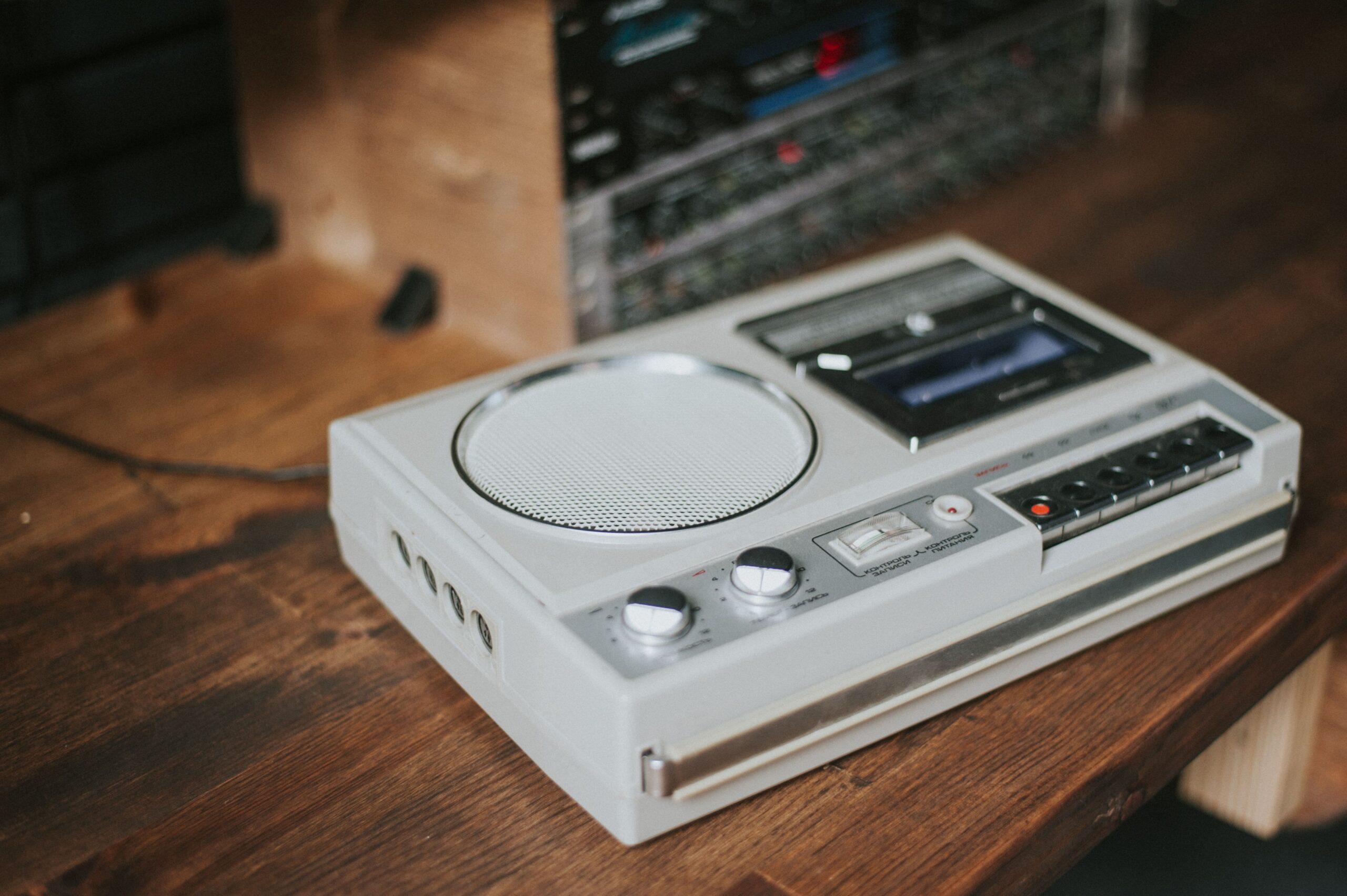
Quick Answer:Learning how to record voice memories starts with choosing a voice, story, or everyday moment you want to preserve. Use your phone’s audio recorder in a quiet environment, record naturally rather than reading a perfect script, and save the recording with a date and description. Voice memories can preserve laughter, accents, expressions, and personal stories that photographs alone cannot capture. You can also use Hippora’s Voice Memories feature to keep recordings connected to your wider life story.
There is a sound you know so well that you’ve probably never thought about losing it.
Someone’s laugh.
The way your mother says your name.
Your father’s voice when he’s telling a story you’ve already heard a hundred times.
Your child’s pronunciation of a word they haven’t quite learned yet.
You hear these things so often that they become part of the background of your life.
Ordinary.
Familiar.
Almost invisible.
Then one day, something changes.
A child grows older.
Someone moves away.
A relationship changes.
A person you love is no longer there.
And suddenly, you find yourself trying to remember a sound.
Not what they looked like.
You have photographs for that.
Not what they said.
You remember some of their words.
But the actual sound of their voice.
The rhythm.
The accent.
The way they laughed halfway through a sentence.
And you realise that something you heard thousands of times was never recorded.
We take photographs because we know moments disappear.
But how often do we think about preserving the sounds of our lives?
Why Learning How to Record Voice Memories Matters
Open the photographs on your phone.
You probably have hundreds.
Perhaps thousands.
Holidays.
Birthdays.
Meals.
Sunsets.
Children playing.
People you love.
Now imagine you could press one of those photographs and hear the moment again.
Not a soundtrack added afterwards.
The real sound.
Your family talking around the table.
Someone laughing behind the camera.
Your child explaining something with complete seriousness.
The sound of the sea in the background.
A voice saying something ordinary that now means much more.
A photograph preserves a visual perspective.
A voice recording preserves something different.
The sound of a person occupying a particular moment in time.
And sound can be a powerful cue for autobiographical memory.
In research on music-evoked autobiographical memories, psychologists have explored how familiar sounds can bring personal experiences to mind.
For example, Janata’s 2009 study, The Neural Architecture of Music-Evoked Autobiographical Memories, examined how music associated with personal memories engages brain systems involved in autobiographical recollection.
That research concerned music, not family voice recordings, so it doesn’t establish that recording someone’s voice will produce the same effects.
But it illustrates a broader point: sound can become closely associated with the experiences of our lives.
And sometimes hearing something familiar can bring back details that are difficult to summon deliberately.
A voice recording won’t preserve everything about a person.
But it may preserve something that a photograph cannot.

1. Record the Ordinary Voice, Not Just the Special Occasion
Most people think about recording important events.
A wedding speech.
A graduation.
A milestone birthday.
A baby’s first words.
Those recordings can be precious.
But consider the moments we rarely think to capture.
Your father explaining how to fix something.
Your mother talking about what she’s cooking.
Your partner telling you about their day.
Your child describing an imaginary world they’ve invented.
A friend laughing so hard they can’t finish a sentence.
These are not necessarily dramatic moments.
And that’s exactly what makes them interesting.
They represent the ordinary texture of a relationship.
Years later, you may have forgotten the details of a particular celebration.
But hearing someone speak naturally can remind you of the way everyday life felt around them.
Try recording a simple conversation.
Ask someone to tell you about their day.
Or about a childhood memory.
Or about something they find funny.
Don’t make the recording feel like an interview unless that’s what they enjoy.
Let the conversation unfold.
And always ask permission before recording another person.
The goal isn’t to collect voices without people knowing.
It’s to preserve moments together, with their knowledge and consent.
2. Ask Questions That Bring Stories to Life
If you want to record a parent or grandparent, you might begin with a question like:
“Tell me about your childhood.”
It’s a reasonable question.
But it’s also enormous.
Where would they begin?
What should they include?
Sometimes more specific questions lead to more interesting stories.
Try asking:
- What did your home look like when you were little?
- What did you do for fun when you were a teenager?
- What was your first job?
- How did you meet your closest friend?
- What did your parents always say to you?
- What’s something you did when you were young that your children would never believe?
- Which family story makes you laugh every time you tell it?
Then listen.
Don’t rush to the next question.
Sometimes the most interesting detail appears after someone has finished answering.
They remember something.
Pause.
Laugh.
And begin another story.
Let them.
A voice memory doesn’t need to follow a perfect structure.
In fact, the unexpected moments may be the ones you treasure most.
3. Preserve the Way People Speak
Every voice contains distinctive details.
An accent.
A rhythm.
A favourite expression.
A particular way of pronouncing someone’s name.
A laugh that arrives before the joke is finished.
These details can be difficult to describe accurately in writing.
You might remember that your grandmother always called you by a particular nickname.
But the written word doesn’t preserve exactly how she said it.
A recording can.
This is especially meaningful for families with different languages, accents or cultural backgrounds.
Perhaps your parents speak a language you understand but rarely use yourself.
Perhaps your grandparents have expressions that younger generations no longer recognise.
Perhaps your family has a particular way of telling stories.
Recording those voices can preserve more than information.
It can preserve elements of how a family communicates.
Ask someone to tell a favourite story in the language they naturally use.
Or to explain a phrase they’ve said for years.
Or simply to say the names of the people they love.
Don’t worry about making it sound professional.
You aren’t producing a documentary for television.
You’re preserving a piece of your own life.
4. Record Your Own Voice Before You Think You Have Anything Important to Say
Here’s something most people overlook.
Your voice is worth preserving too.
Not because you’re famous.
Not because you have extraordinary wisdom.
Not because you’ve lived through something dramatic.
But because the person you are today will not remain exactly the same.
Your opinions will develop.
Your priorities may change.
You may move somewhere new.
Become a parent.
Change careers.
Fall in love.
Experience loss.
Discover something that alters the way you see the world.
Imagine listening to yourself ten years from now.
You hear your voice describing an ordinary day in 2026.
You talk about what you’re working on.
What you’re worried about.
What you’re excited about.
What you hope happens next.
Your future self already knows what happened.
But the person speaking doesn’t.
That’s what makes the recording interesting.
It captures your perspective before the future became your past.
Try recording a two-minute message.
Start with:
“Today is [date], and this is what my life looks like right now.”
Then talk naturally.
Where are you?
What’s happening in your life?
What matters most?
What are you looking forward to?
What would you like your future self to remember?
You don’t need to sound impressive.
You just need to sound like yourself.
5. Capture Moments Without Turning Every Moment Into Content
There’s an important balance here.
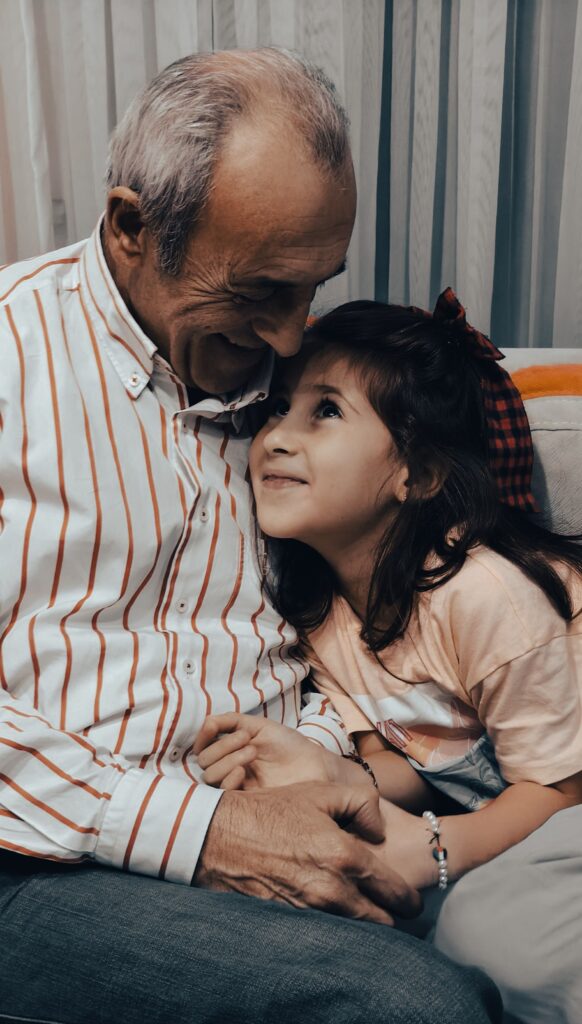
You can become so focused on preserving experiences that you stop fully participating in them.
Think about someone attending a concert.
They spend the entire evening watching through their phone screen.
They capture dozens of videos.
But later, they realise they barely remember the experience without looking at the recordings.
Research on photographing experiences offers an interesting perspective.
In a 2014 study, psychologist Linda Henkel examined what she called the photo-taking-impairment effect.
Participants who photographed museum objects remembered fewer details about some of those objects than participants who simply observed them.
The paper, Point-and-Shoot Memories, suggests that the relationship between recording an experience and remembering it is more complicated than simply capturing more information.
This study examined photography, not audio recording, and its findings shouldn’t be treated as proof that making voice memories harms memory.
But it raises a useful question.
Are you recording something because you want to preserve it?
Or are you so occupied with documenting it that you’re no longer enjoying it?
A good voice memory doesn’t require constant recording.
Sometimes thirty seconds is enough.
Sometimes the best decision is to put your phone away.
The goal is to preserve meaningful moments without making the act of preservation more important than living them.
6. Give Every Voice Memory Enough Context to Matter Later
Imagine discovering an audio file on an old phone.
It’s called:
Recording_0047.m4a
You press play.
Someone is laughing.
There’s traffic in the background.
A person says something about a birthday.
But you can’t remember when it happened.
Or where.
Or who else was there.
The recording may still be enjoyable.
But much of its context has disappeared.
That’s why a small amount of organisation matters.
Whenever you save a voice memory, include three things.
The date.
When was it recorded?
The people.
Whose voices are in the recording?
The moment.
What was happening, and why did you want to remember it?
For example:
“Sunday lunch with Dad, October 2026. He was telling us about his first job and laughing about something that happened when he was eighteen.”
That description may take only a few seconds to write.
But years later, it could make the recording much easier to understand.
You can also add a sentence about how you felt.
“It was one of those afternoons when nobody wanted to leave the table.”
Now the memory contains more than sound.
It has context.
And context can help connect a recording to the wider story of your life.
7. Make Sure the Recording Will Still Exist Years From Now
A voice memory isn’t much use if you can’t find or play it later.
Phones get replaced.
Apps change.
Accounts are closed.
Files become difficult to locate.
And recordings can be lost when devices are damaged, or storage fails.
So think beyond the moment of recording.
Choose a format you can access.
Keep important files organised.
Use a reliable backup system.
And consider maintaining an additional copy of recordings that would be especially difficult to replace.
The familiar 3-2-1 backup approach is a useful starting point: keep three copies of important data, on two different kinds of storage, with one copy off-site.
You don’t have to build a complicated archive.
But if a recording contains the only surviving audio of someone you love, it’s worth treating that file as important.
If you’re recording other people, consider their privacy too.
Ask before sharing recordings.
Be especially careful with sensitive conversations and children’s voices.
And remember that preserving a memory doesn’t automatically mean it should be public.
Some recordings are valuable precisely because they remain personal.
A Simple Voice Memory Exercise You Can Do Today
You don’t need special equipment.
Just your phone and a few quiet minutes.
The Two-Minute Time Capsule
Open an audio recording app.
Say today’s date.
Then answer these five questions aloud:
- Where am I in my life right now?
- Who are the people I spend the most time with?
- What is something I’m looking forward to?
- What is something I’m trying to understand or work through?
- What would I like to remember about this period of my life?
Don’t prepare a speech.
Don’t restart every time you stumble over a word.
Speak naturally.
When you’ve finished, give the recording a descriptive name.
Then leave it.
Come back in six months.
Or a year.
Or five years.
You may be surprised by what you remember.
And by what you’ve already forgotten.
Where Hippora Fits: Voice Memories That Belong to Your Life Story
Most voice recording apps are designed to capture audio.
You press Record.
You save a file.
And eventually, you may have a collection of recordings scattered across different devices or folders.
Hippora approaches voice memories as part of something larger.
Hippora is an AI life companion built around continuity across conversations, memories, and the chapters of your life you choose to preserve.
Its Voice Memories feature lets you record thoughts and experiences in your own voice.
Some moments deserve to be heard, not just read.
But Voice Memories also sits alongside other ways of preserving your life.
With AI Journal, you can write about experiences, reflect through Gratitude, Goals, Release, and Insights, and revisit meaningful entries.
With Future Letters, you can write a message to your future self, choose an opening date, and seal it until that day arrives.
And Life Calendar helps you revisit journal entries, voice memories, and letters across months and years.
Together, these features create different ways of preserving the moments that make up your life.
A conversation today.
A voice recording next month.
A letter you won’t open for five years.
A journal entry that means something different when you read it again.
These aren’t separate ideas.
They’re different ways of remembering.
Hippora’s My Story, Life Compass, and Insights also support reflection on the experiences and changes you’ve chosen to share.
And because memory should remain under your control, Hippora includes memory controls and Private Topics to help you manage what becomes part of your longer story.
You can explore the wider importance of preserving personal experiences in our article How to Remember Your Life Better.
If you’d like to begin recording your own voice memories as part of a connected life story, download Hippora on the App Store for iPhone.
Hippora Free is permanent, with no card and no countdown.

A Note About Grief and Voice Recordings
For some people, hearing the voice of someone who has died can be comforting.
For others, it can be painful.
And the same person may experience both reactions at different times.
There isn’t one correct way to respond.
You don’t have to listen to a recording simply because you have it.
You don’t have to preserve every conversation.
And you don’t have to turn memories into an obligation.
If listening to a recording brings up overwhelming distress, it’s reasonable to put it away and return when you feel ready, or seek support from someone you trust or a qualified professional.
Voice memories can be meaningful.
But they should serve the people whose lives they preserve.
Not become another source of pressure.
Frequently Asked Questions
How to record voice memories on your phone?
Open your phone’s voice recording app, choose a quiet location, and press Record. Speak naturally or invite someone to share a story with their permission. Save the recording with a date, names, and a short description so you can understand it years later.
What should I record for my future self?
Describe your everyday life, relationships, ambitions, worries, and hopes. Include details that might seem ordinary now, such as where you live, what you’re working on and what matters to you.
How long should a voice memory be?
There is no ideal length. A thirty-second recording of someone’s laughter may be precious. A twenty-minute conversation about family history may be equally meaningful. Focus on preserving the moment rather than reaching a particular duration.
Can voice recordings help preserve family memories?
Yes. Recordings can preserve stories, expressions, accents, and the sound of people’s voices. They are one way to document family history alongside photographs, written memories, and other records.
Is it better to record audio or video?
Both preserve different information. Video captures appearance and movement alongside sound, while audio can be simpler and less intrusive. The best choice depends on the moment and the preferences of the people involved.
How do I organise voice memories?
Use descriptive names, dates, and brief notes about the people and events involved. Keep important recordings backed up and choose storage you can access in the future.
Can I record voice memories in Hippora?
Yes. Hippora includes Voice Memories for recording thoughts and experiences in your own voice. Life Calendar also provides a way to revisit voice memories alongside journal entries and Future Letters.
The Bottom Line: One Day, an Ordinary Voice May Become an Extraordinary Memory
Think about the people you spoke to today.
The conversations you barely noticed.
The jokes.
The questions.
The familiar greetings.
The voices that make up the background of your life.
Most of those sounds will disappear.
Not because they weren’t important.
But because ordinary life doesn’t announce which moments will matter later.
You can’t record everything.
And you shouldn’t try.
There is too much life to live.
But you can preserve a little.
A story.
A laugh.
A message to your future self.
A parent remembering their childhood.
A child explaining how they see the world.
One day, you might listen to that recording.
And hear more than the words.
You might remember the room.
The people.
The atmosphere.
The person you were when you pressed Record.
And for a few moments, something from the past will feel remarkably close.
Photographs help us remember what life looked like. Sometimes a voice is what helps us remember how it sounded.
Keep discovering who you're becoming.
Hippora connects your conversations, memories, and reflections over time.